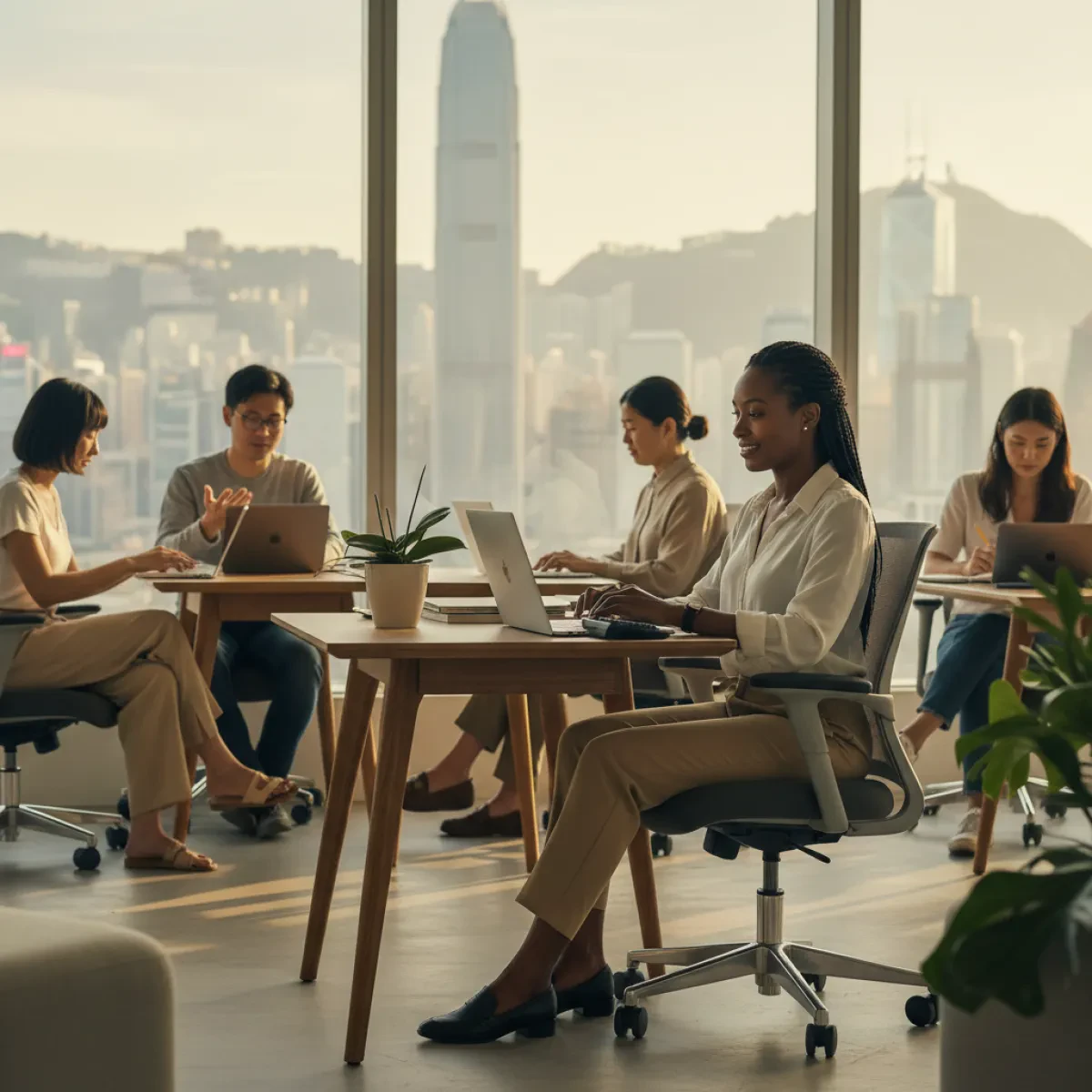
- Hong Kong's high-density housing requires specialized ergonomic solutions that differ from standard Western home office setups.
- Compact chairs with breathable mesh are preferred over bulky executive leather options due to humidity and space constraints.
- Vertical monitor mounting and wall-desk systems help maintain proper viewing angles without consuming floor depth.
- Active sitting and regular micro-movements are cited by physiotherapists as essential compensations for static postures in small rooms.
For remote workers in Hong Kong, the concept of a home office often clashes with the reality of local real estate. With the average living space significantly smaller than in North American or European cities, the luxury of a dedicated study with a sprawling desk and executive chair is rare. Instead, professionals frequently adapt dining tables, window bays, or compact corners into workspaces. This spatial constraint presents distinct ergonomic challenges, particularly regarding sitting posture and long-term spinal health.
According to occupational health data, prolonged sitting in improvised setups contributes to a rise in musculoskeletal disorders among telecommuters. However, limitations on floor area do not necessarily preclude ergonomic safety. By prioritizing vertical alignment and selecting furniture scaled to the environment, workers in high-density urban centers can mitigate the physical toll of remote work.
The Geometry of Compact Sitting
The core principle of office ergonomics remains consistent regardless of room size: the goal is a neutral spine. Physiotherapists generally define this as maintaining the ears, shoulders, and hips in vertical alignment. In small Hong Kong apartments, the depth of the workspace is often the limiting factor. A standard office desk is 80cm deep, but many compact solutions in local markets range from 40cm to 60cm. This reduced depth forces the worker closer to the wall or window, often compromising legroom and monitor distance.
Reports from local ergonomic consultants suggest that in shallow workspaces, the chair becomes the critical variable. Large seat pans can prevent the user from sitting close enough to the work surface, leading to forward leaning or "turtling" of the neck. For detailed insights on adapting layouts in dense cities, readers may refer to Ergonomics in Compact Spaces: Optimizing Home Office Setups in Hong Kong and Singapore.
The 90-90-90 Rule in Practice
Ergonomic guidelines typically advocate for the 90-90-90 rule: elbows, hips, and knees bent at 90-degree angles. Achieving this in a nano-flat requires precise furniture selection. If a desk is too high (common with dining tables) and the chair cannot be raised sufficiently without lifting feet off the floor, the resulting posture places strain on the lumbar region. Footrests are a standard recommendation to bridge this gap, stabilizing the lower body even when the chair is elevated to meet a non-adjustable table height.
Climate Considerations: Material Matters
Ergonomics is not solely about geometry; it also involves thermal comfort. Hong Kong's humidity averages over 80 percent for much of the year. Heavy foam or leather chairs, while often marketed as ergonomic, can retain heat and moisture, leading to discomfort and shifting posture as the user subconsciously moves to find a cooler position.
Market analysis of office furniture in Southeast Asia indicates a strong preference for high-tensile mesh backrests. These allow for airflow and temperature regulation, which supports sustained concentration. Similar challenges are faced by professionals in other tropical regions; a comparison of material choices can be found in the report on Ergonomic Sitting Strategies for Remote Workers in High-Humidity Climates like Brazil.
Optimizing the Visual Field
Sitting posture is dictated by the eyes. The body follows the gaze. If a monitor is too low (common with laptops on dining tables), the head drops forward, increasing the effective weight of the head on the cervical spine. In small spaces where deep desks are impossible, monitor arms that clamp to the back edge of a desk are a space-saving solution reported by tech reviewers to reclaim surface area while positioning the screen at eye level.
For those working in multi-use spaces where equipment must be stowed away, laptop risers paired with external keyboards offer a temporary yet ergonomically sound configuration. This setup mimics the desktop experience without the permanent footprint. Contrasting approaches to home office design in more spacious environments are detailed in Swedish Ergonomics: Designing a Health-Conscious Home Office in Malmo, highlighting how square footage dictates ergonomic strategy.
Active Sitting and Micro-Movements
Given that a dedicated ergonomic chair may not fit in every Hong Kong home, some health professionals emphasize "active sitting." This involves using stools that encourage engagement of the core muscles or simply changing positions frequently. While not a replacement for lumbar support during deep work sessions, varied movement prevents the stagnation associated with rigid postures.
Furthermore, the lack of a commute in a remote setting eliminates the natural walking intervals of a workday. Integrating standing breaks is crucial. While not strictly about "sitting," the transition between sitting and standing is vital for circulation. This concept of postural variety is also relevant for frequent travelers who lack control over their seating, as explored in Surviving the Ultra-Long Haul: Postural Health Strategies for Singapore Business Travelers.
When to Consult a Professional
Persistent back pain, numbness in the fingers (often a sign of nerve compression), or chronic headaches can be indicators of a failing ergonomic setup. In Hong Kong, physiotherapists and occupational therapists offer workplace assessments, sometimes virtually, to diagnose environmental causes of pain. It is generally advisable for individuals experiencing recurring symptoms to seek medical guidance rather than relying solely on furniture adjustments.
Employers of Record (EOR) and international HR departments are increasingly recognizing the liability associated with poor home office setups. Some multinational companies now provide stipends specifically for ergonomic assessments or certified equipment, acknowledging that a healthy worker is a productive one.