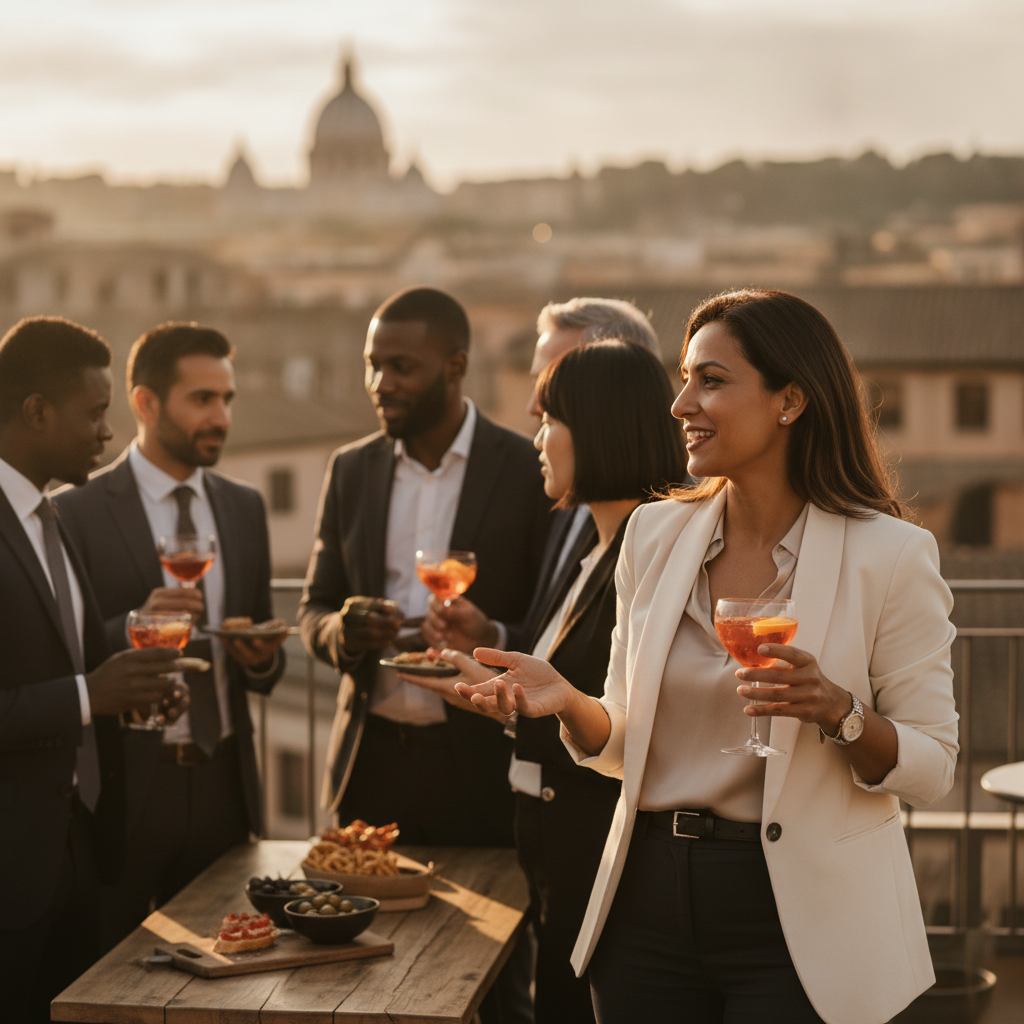
- La Bella Figura: In Milan, presentation is a proxy for competence. Impeccable grooming and manners are non-negotiable professional assets.
- The Relationship-Task Hybrid: Unlike Southern Italy, Milanese business culture blends relationship-building with Germanic efficiency.
- The Bill Protocol: The inviting party always pays. Attempting to split the bill ('pagare alla romana') in a formal business context can be a faux pas.
- Timing: Lunch typically starts between 1:00 PM and 1:30 PM. Punctuality is expected, unlike in other Mediterranean regions.
For international professionals entering the Milanese market, the business lunch—il pranzo di lavoro—is not merely a break for sustenance. It is a strategic arena where trust is calibrated, hierarchies are respected, and deals are implicitly sanctioned before they are explicitly signed. Milan, often described as the most 'European' of Italian cities, presents a unique cultural hybrid: it possesses the industrial efficiency of Frankfurt yet retains the relational intricacies of the Mediterranean.
According to Erin Meyer’s The Culture Map, Italy sits firmly on the relationship-based side of the 'Trusting' scale. However, Milanese corporate culture shifts slightly toward the task-based spectrum compared to Rome or Naples. Understanding this nuance is critical for expatriates and global job seekers looking to integrate into Italy’s financial and fashion capital.
The Cultural Framework: 'La Bella Figura'
The concept of La Bella Figura is frequently misunderstood by foreigners as simple vanity. In a professional context, it extends far beyond wearing a tailored suit. It is a philosophy of 'good form'—projecting confidence, social correctness, and aesthetic harmony. In Milan, your visual presentation and behavioural elegance are interpreted as indicators of your professional attention to detail.
Just as one might analyse professional grooming standards for high-end hospitality roles in Dubai, in Milan, the stakes for visual conformity are high. A sloppy appearance suggests sloppy work. Cross-cultural researchers note that Italians often use visual cues to assess credibility (ethos) before engaging with logic (logos). Consequently, 'casual Fridays' are rarely as casual as they are in London or San Francisco. When in doubt, lean towards formal business attire.
Hierarchy and Address: The Power of Titles
Italy scores relatively high on Hofstede’s Power Distance Index (50), though lower than many Asian or Latin American nations. In Milan, this manifests in the rigorous use of professional titles. Unlike the egalitarian approach found in Australian professional settings, dropping titles too early in Italy can signal a lack of respect.
It is standard protocol to address counterparts as:
- Dottore / Dottoressa: Used for anyone with a university degree (not just PhDs or medical doctors).
- Avvocato: For lawyers.
- Ingegnere: For engineers.
Always use the formal 'Lei' form of address until explicitly invited to use the informal 'tu'. This transition is a significant relationship milestone and should not be rushed by the junior or foreign party.
The Dining Ritual: Protocols and Pitfalls
The business lunch in Milan is a ritualised event. While efficiency is valued, rushing through a meal is culturally jarring. The lunch allows counterparts to assess your 'human' side—your ability to enjoy life, conversation, and food—which forms the basis of trust.
1. The Invitation and Seating
If you are the host, you choose the restaurant. Select a venue that is quiet enough for conversation but prestigious enough to honour the guest. Upon arrival, wait to be seated. In formal settings, the host indicates where the guest should sit, usually the seat with the best view or facing the room.
2. Ordering and Alcohol
Milanese business lunches are generally lighter than in the past, often consisting of a single course (a 'piatto unico') or two courses (antipasto and primo, or primo and secondo). It is acceptable to follow your host’s lead.
The Wine Question: Unlike the strict prohibition often seen in US corporate culture, a glass of wine at lunch is culturally acceptable in Italy. However, moderation is key. Being visibly intoxicated is a severe breach of La Bella Figura. If the host orders wine, you may partake; if they stick to sparkling water, you should generally follow suit.
3. Table Manners
Dining etiquette is scrutinized. Common observations for international professionals include:
- Pasta: Never cut pasta with a knife. Use a fork. Spoons are generally for children or very specific informal dishes, though tolerance for this varies.
- Bread: Bread is not a separate course; it accompanies the meal. Do not use butter unless it is specifically provided (rare in Italy).
- Hands: Keep both hands on the table (wrists resting on the edge), not in your lap. This is the opposite of the Anglo-Saxon 'hand in lap' rule.
- Espresso: Coffee is served strictly after the meal, never with it. Do not order a cappuccino; milk-heavy coffees are for breakfast only. Ordering a cappuccino after lunch marks you immediately as a tourist.
4. The Bill
The rule is simple: the person who extends the invitation pays. The concept of 'splitting the bill' (pagare alla romana) is virtually non-existent in business contexts. Fighting over the bill is a polite theatre, but the host must ultimately win. If you are the guest, express sincere thanks; do not insist on paying to the point of awkwardness.
Communication Styles: High Context and Expressiveness
While interpreting silence is crucial in Japanese business meetings, the Milanese context values verbal wit and expressiveness. Italy is a high-context culture where gestures, tone, and eye contact carry significant weight. Interruptions are not necessarily rude; they often signal engagement and interest ('overlapping speech').
Conversation Topics
Good conversation is an art form. Safe and engaging topics include:
- Food and Travel: Italians are rightly proud of their culinary heritage and geography. Asking for local recommendations is an excellent icebreaker.
- Sports: Football (Calcio) is a national obsession. Ideally, know which team your counterpart supports (AC Milan or Inter) before feigning allegiance.
- Art and Culture: Demonstrating knowledge of Milan’s exhibitions or history earns respect.
Topics to avoid include the Mafia (offensive stereotypes), detailed questions about personal income (taboo), or heavy criticism of the Italian government (a sport reserved for locals only). As noted in comparisons of regional etiquette elsewhere, local pride is strong; avoid comparing Milan unfavourably to Rome or other cities.
Networking and Follow-Up
The conclusion of the lunch does not end the interaction. Similar to networking protocols in London's finance sector, the follow-up is crucial. A brief, personalised email thanking the host for the lunch is expected within 24 hours.
Ultimately, doing business in Milan requires a recalibration of efficiency and elegance. By respecting the dining rituals and maintaining La Bella Figura, international professionals demonstrate that they are not just looking for a transaction, but a partnership. In a culture where the personal and professional are intricately woven, these 'soft' skills are the hardest currency of all.