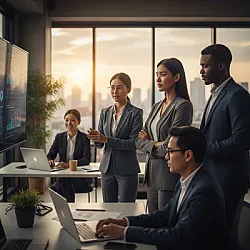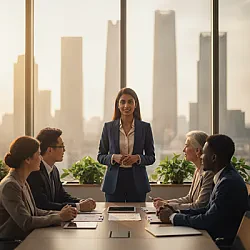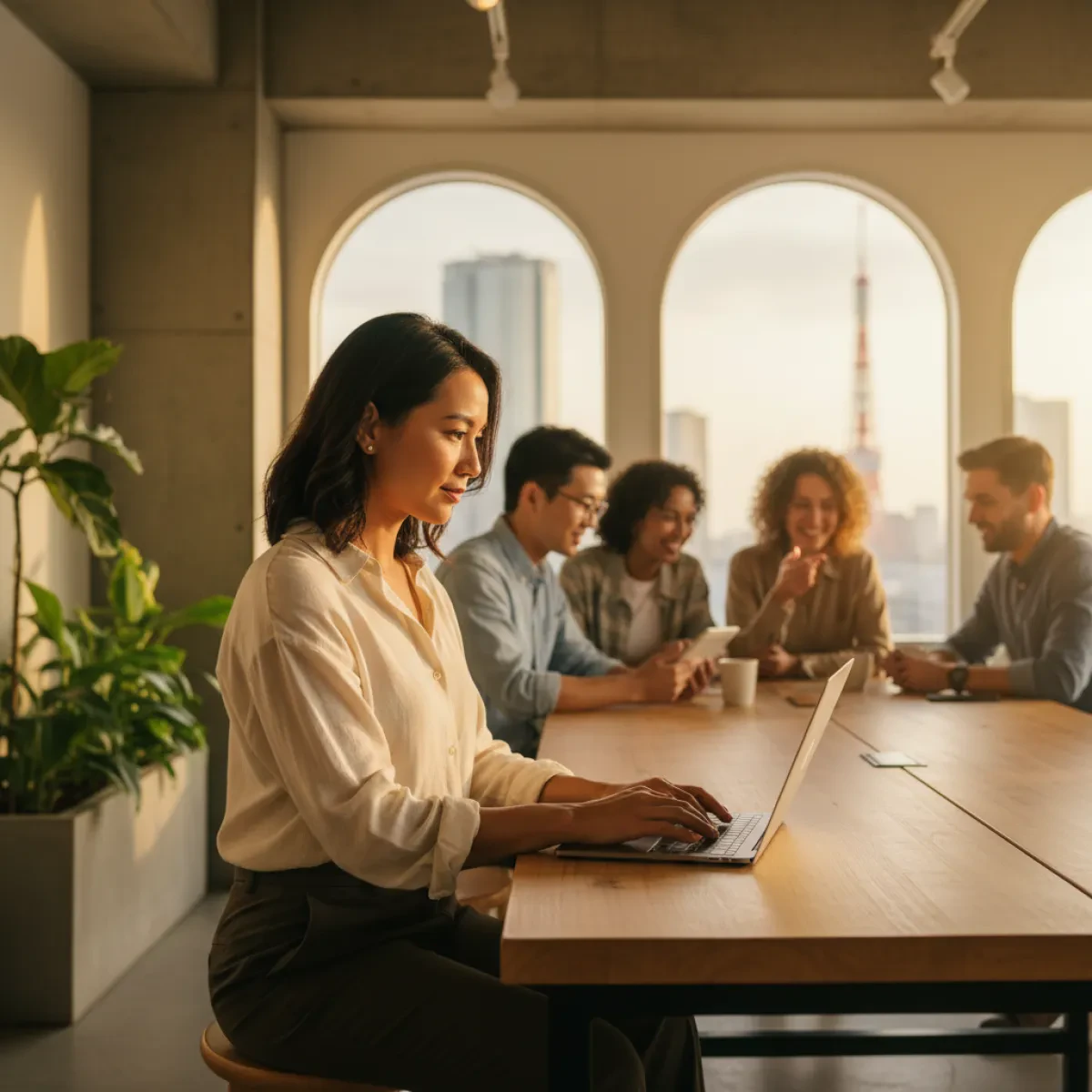
Key Takeaways
- Kamiza and shimoza remain the anchor concepts in Tokyo meetings: the seat furthest from the entrance is generally treated as the place of honour, while the seat closest to the door is reserved for the most junior host.
- Hierarchy is read off the room, not announced. Singapore-based visitors are typically guided to their seat by the host, and waiting is widely considered safer than self-assigning.
- Hybrid setups have not erased these conventions; many Tokyo firms now extend seating logic into camera placement and speaking order on calls dialled in from One Raffles Quay or Mapletree Business City.
- Singapore regional HQs increasingly brief travelling colleagues in advance, treating seating as part of meeting design rather than personal preference.
- For employment, tax, or contract questions tied to a Tokyo assignment from a Singapore base, qualified professionals licensed in the relevant jurisdiction are the appropriate resource.
Why Seating Still Matters for Singapore Executives in Tokyo
For finance, fintech, and biotech professionals based in Singapore, Tokyo sits high on the regional travel list. Whether the meeting is at a Marunouchi tower with a Japanese megabank, a Shibuya start-up backed by Singapore venture capital, or a regulator briefing arranged through the Japan External Trade Organization (JETRO), the choreography of who sits where can feel like the most opaque part of the day. Decks translate. Seating does not.
Reporting on cross-border meeting culture across the Asia Pacific region, one pattern is hard to miss: even as Tokyo offices adopt flexible desks and Zoom-first agendas, formal sessions with clients, regulators, and senior counterparts tend to retain the older seating grammar. For Singaporeans accustomed to the relatively flat, English-first norms of Marina Bay Financial Centre, that grammar is generally less about memorising rules and more about reading the room.
The Core Concepts: Kamiza and Shimoza
Two terms anchor most discussions of Japanese seating etiquette. Kamiza (上座), often translated as the upper seat or seat of honour, typically refers to the position furthest from the entrance. Shimoza (下座), the lower seat, sits closest to the door. Etiquette references published by Japanese hospitality and business training providers describe this layout as rooted in older architectural traditions, where the seat farthest from the entrance was considered both safer and more sheltered, and therefore more honourable.
In a modern Tokyo boardroom hosting a Singapore delegation, the practical translation usually looks like this:
- The most senior visitor, often the regional managing director from Singapore, is generally seated at the kamiza, frequently facing the door from the side opposite the entrance.
- The most senior Tokyo host typically sits opposite, leading the host delegation.
- Junior members of each side, including associates flown in from Raffles Place or analysts based at Singapore EDB-linked offices, are commonly placed nearer the door, with the most junior Tokyo host at or near the shimoza, often handling tea, doors, and timing.
These are reported conventions rather than universal rules. Smaller Tokyo firms, creative agencies, and Singapore-Japan joint ventures sometimes adapt or relax the layout, particularly for informal working sessions.
Reading the Room Layout
Tokyo meeting rooms vary widely, and the kamiza is not always obvious. Etiquette guidance from corporate training firms in Japan tends to highlight a few cues that Singapore-based visitors often find useful:
- Distance from the door: the further from the entrance, generally the higher the status of the seat.
- View of a tokonoma or artwork: in traditional rooms, the seat with the best view of the alcove is usually treated as the kamiza.
- Window orientation: in modern offices, a seat with a clear view of Tokyo Station or the Imperial Palace gardens is sometimes informally treated as the senior position.
- Placement of name cards: when meishi are pre-arranged, the host has effectively communicated the intended seating order, much as Singapore hosts sometimes do for ASEAN delegation lunches.
Host and Guest Dynamics
Japanese business etiquette literature, including widely circulated guides from JETRO and major Japanese trading houses, frames most meetings around a clear host-guest distinction. The host side prepares the room, greets the guests at reception, and guides them in. Singapore executives arriving as guests are typically escorted to their seats; attempting to choose a seat unprompted is generally considered a minor breach, even if unintentional.
A common sequence reported by Singapore-based bankers, consultants, and biomedical executives looks like this:
- Guests are received in the lobby and walked to the meeting room.
- On entering, guests pause near the door and wait for the host to indicate seats.
- The senior host gestures toward the kamiza for the senior guest, with other guests directed to adjacent seats in approximate order of seniority.
- Host team members take their seats only after guests are settled, with the most junior typically nearest the door.
For Singapore professionals more accustomed to the relatively informal pace of a Robinson Road catch-up, this pause can feel awkward at first. Several Tokyo-based bilingual facilitators interviewed in trade press coverage describe coaching foreign clients to wait, smile, and follow the gesture rather than improvising.
Meishi Exchange and Its Link to Seating
Business card exchange, or meishi koukan, often happens before anyone sits down. Although Singapore offices increasingly run on LinkedIn introductions and digital contact sharing, Tokyo meetings continue to lean on physical cards. Etiquette manuals from Japanese HR and training firms describe a typical pattern: cards are presented and received with both hands, studied briefly, and then placed on the table in front of the recipient in the order matching the seating arrangement.
The seating layout therefore becomes a kind of organisational map for the rest of the meeting. Visiting Singapore executives often find it helpful to:
- Bring more cards than expected. Multiple Japan-desk professionals at Singapore banks report carrying 30 to 50 cards for a two-day Tokyo trip.
- Keep cards visible on the table until the meeting concludes.
- Refer back to them silently when matching names, titles, and faces.
- Avoid stacking cards, writing on them in the room, or putting them away early, which is widely reported as discourteous.
Readers comparing this with other regional norms may find the contrasts in Korean chaebol hierarchy from a Singapore professional's lens useful, since seating and address forms encode authority differently across North Asia.
Specific Configurations Singapore Delegations Encounter
Rectangular Boardroom Tables
The most common Tokyo boardroom layout places guests on one long side of the table and hosts on the other, with the senior guest and senior host facing each other near the centre or far end from the door. Interpreters, frequently engaged through Singapore-based agencies that maintain Japan rosters, are typically seated next to or just behind the senior guest, slightly offset to allow eye contact between principals.
Round Tables and Informal Rooms
Round tables soften the geometry but rarely remove hierarchy entirely. Etiquette references generally describe the seat furthest from the door as the kamiza even at round tables, with the senior host opposite. Some Japanese firms hosting Singapore clients deliberately choose round tables for early relationship-building meetings, where a less rigid layout is reported to help conversation flow, particularly for fintech or biotech partnerships originating from one of the regional headquarters clustered around the Central Business District.
Traditional Tatami Rooms
Client dinners and certain executive meetings still take place in tatami rooms, particularly in sectors with strong domestic traditions. The kamiza in such rooms is typically the seat closest to the tokonoma alcove. Guidance from ryotei and ryokan industry sources notes that shoes are removed at the threshold, that stepping on the edge of tatami mats is generally avoided, and that seating positions are usually indicated by the okami or host. Singapore visitors used to the casual shoes-off norms of HDB visits often find the formality of a Kyoto-style ryotei a notable shift.
Taxis and Cars
Seating logic extends beyond meeting rooms. Multiple Japanese business etiquette guides describe the seat behind the driver as the traditional kamiza in a chauffeured car, with the front passenger seat often treated as the shimoza when a junior staff member rides along. Singapore executives, accustomed to grabbing the front seat in a ComfortDelGro or Grab ride, frequently report being directed to the rear without explanation; following the gesture is generally considered the simplest response.
Hybrid and Remote Adaptations from Singapore
Post-2020, both Tokyo and Singapore firms have grown comfortable with hybrid meetings. Yet several Japanese conventions have migrated rather than disappeared. HR consultants and bilingual meeting facilitators writing in Japanese business media have described emerging patterns relevant to Singapore-based regional teams:
- Camera placement that mirrors physical hierarchy, with the senior Tokyo host visible centrally on the screen.
- Speaking order on video calls that still follows seniority, with junior staff often deferring until invited.
- On-screen name plates that include department and title in Japanese order, helping Singapore participants infer relative rank.
- Pre-meeting seating briefings sent by Tokyo coordinators to Singapore counterparts, especially when client executives will join in person at Otemachi while Singapore colleagues dial in from Raffles Place.
For remote-first Singapore professionals balancing multiple regions, time-zone management is its own discipline. Coverage of scope creep and burnout among Singapore freelancers working with Australia outlines how cross-regional meeting fatigue compounds when etiquette expectations differ across markets.
Common Mistakes Reported by Singapore Visitors
Tokyo-based intercultural trainers interviewed in trade publications frequently cite a recurring set of missteps by international visitors, including those flying in from Changi. Most are minor and recoverable, but they can shape first impressions:
- Choosing a seat unprompted, particularly the seat that turns out to be the host's intended kamiza.
- Sitting before the senior guest or host has taken their seat.
- Placing belongings, including laptops and phones, on the table before the meeting begins, which can disrupt the meishi layout.
- Rearranging chairs to face a screen without checking with the host first.
- Standing up too early to leave, which can be read as rushing the senior counterpart, particularly awkward when a Singapore delegation is racing to make a return SQ flight.
None of these are catastrophic. Multiple Tokyo executives quoted in business press coverage emphasise that international visitors are generally given significant latitude, and that visible effort to follow local conventions tends to be appreciated more than perfect execution.
Singapore Job Market Context: Why This Matters
Singapore's positioning as a regional headquarters hub for finance, fintech, biotech, logistics, and technology means that mid-career and senior professionals here often manage Japan accounts as part of their remit. Banks at Marina Bay, regional teams at Mapletree Business City, and biomedical clusters at Biopolis all routinely send staff to Tokyo. The Ministry of Manpower (MOM) administers Employment Pass (EP), S Pass, ONE Pass, and Tech.Pass categories that can apply to professionals rotating into and out of Singapore from Japan-related roles, and the COMPASS framework generally factors into EP renewals for those whose mandates include North Asia coverage.
For broader hiring and compensation context that frequently overlaps with Japan-facing mandates, readers may find pay anchors and counteroffers in Singapore banking useful as comparative reading.
Practical Observations for Singapore Delegations
For teams travelling from Singapore into Tokyo for a deal cycle or quarterly review, a few practical patterns are worth noting based on reporting from cross-border deal advisors and corporate travel managers:
- Confirm the delegation order in advance. Tokyo hosts often pre-arrange seats based on titles communicated by email, so accurate role descriptions on the visitor list, including any Singapore-specific titles such as Regional Head ASEAN, matter.
- Brief junior travellers. Analysts and associates joining their first Tokyo meeting frequently report that a five-minute pre-meeting briefing on kamiza, shimoza, and meishi handling reduces anxiety significantly. Many Singapore banks and consultancies fold this into onboarding.
- Coordinate with interpreters. Professional interpreters working in Tokyo typically have strong views on seating for sightlines and audio quality; their input is widely treated as part of meeting logistics.
- Respect the host's pacing. Tea or coffee service often signals the formal start of the meeting; beginning the agenda before service is complete is generally avoided.
- Budget realistically. A typical two-night Tokyo business trip from Singapore can run from around SGD 2,500 to SGD 5,000 per traveller depending on hotel category and lead time; corporate travel desks in Singapore generally publish their own caps.
When Conventions Bend
Not every Tokyo meeting follows the textbook layout. Several scenarios are commonly reported in which seating logic is intentionally relaxed:
- Start-up offices with open-plan rooms and stand-up culture, where founders may deliberately downplay hierarchy with Singapore venture investors.
- Design and creative agencies that prioritise collaborative seating around shared screens or whiteboards.
- Internal team huddles within global firms where the working language is English and the team includes Singapore, Tokyo, and Sydney members.
- Off-site retreats framed as informal, where seating is often left to participants.
Even in these settings, etiquette observers note that residual conventions tend to surface when external clients, regulators, or senior visitors join. Treating relaxed seating as a temporary mode rather than a permanent shift is a common stance among Tokyo-based managers.
When to Seek Professional Guidance
Sitting etiquette is a cultural and behavioural topic, but Tokyo assignments often touch on adjacent matters that fall outside the scope of journalism. Questions about employment contracts, secondment structures, tax residency between Singapore and Japan, CPF treatment for outbound assignees, social insurance, and immigration status are generally best directed to qualified professionals licensed in the relevant jurisdictions. The Singapore Ministry of Manpower, the Inland Revenue Authority of Singapore (IRAS), and the Immigration and Checkpoints Authority (ICA) are typically the appropriate references for Singapore-side regulatory questions, while Japanese government bodies such as the Immigration Services Agency are generally the authoritative reference for the Japan side.
Visit the Ministry of Manpower website to apply for Employment Passes, S Passes, or check your work permit eligibility.
Singapore uses a points-based COMPASS framework for Employment Pass applications. Employers must submit applications on behalf of foreign workers.
Final Reportorial Note
For all the structure around kamiza and shimoza, Tokyo boardroom culture is not a museum exhibit. It is a living set of conventions that adapts to hybrid work, multinational teams, and a generation of younger Japanese executives more comfortable with informality, often after stints in Singapore, London, or New York. Singapore-based visitors who treat seating as a meaningful signal, follow the host's lead, and avoid improvising in formal settings tend to be reported on favourably by their Japanese counterparts, regardless of how many of the finer points they have memorised.