Key Takeaways
- Aesthetics vs. Health: Many of Lisbon's most visually appealing heritage coworking spaces prioritize vintage design over ergonomic standards (EN 1335).
- The "Cafe Bench" Risk: Extended work sessions in popular nomad cafes in Alfama and Baixa often lead to postural fatigue due to unadjusted seating heights.
- Infrastructure Variance: Industrial conversions in Alcântara typically offer better modern office furniture compared to residential conversions in Príncipe Real.
- Vetting Strategy: Remote workers should inspect chair adjustability and desk height ratios before committing to monthly memberships.
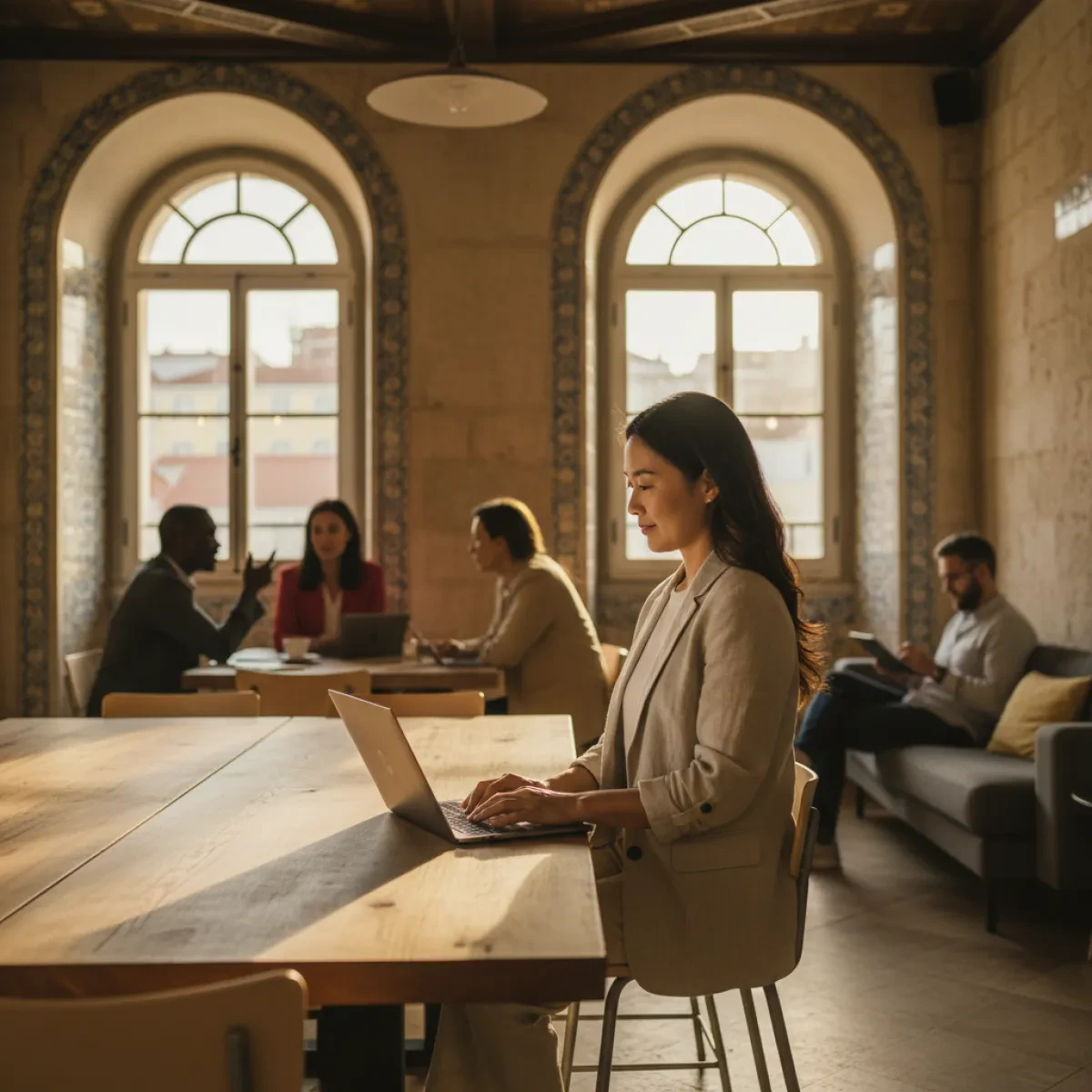
Lisbon has firmly established itself as a premier European capital for digital nomads, drawing remote professionals with its Atlantic light, mild winters, and vibrant tech ecosystem. The city's unique architectural heritage—characterised by Pombaline tiles, high ceilings, and limestone pavements—has been ingeniously repurposed to house the modern workforce. From converted 18th-century palaces in Príncipe Real to refurbished warehouses in Alcântara, the physical environment of remote work in Lisbon is undeniably picturesque.
However, a growing number of long-term nomads report a common challenge: the physical toll of working in spaces designed for aesthetics rather than ergonomics. While a velvet armchair in a restored salon looks excellent on social media, it rarely provides the lumbar support required for an eight-hour coding session. For professionals accustomed to corporate-grade infrastructure, transitioning to the "shabby chic" seating common in Lisbon's creative hubs requires a strategic approach to posture and workspace selection.
The Conflict Between Heritage and Ergonomics
The charm of working from Lisbon often lies in the atmosphere. Many coworking operators leverage the city's history by maintaining original flooring, non-standard room shapes, and antique furnishings. This preservation effort, while culturally significant, introduces specific ergonomic hurdles.
The "Bica" Chair Phenomenon: Classic Portuguese wooden chairs, often found in cafe-style working hubs, lack the adjustability of modern task chairs. They are static, with rigid backrests that do not recline or conform to the spine's natural curve. According to general ergonomic principles, static seating forces the sitter to adapt their body to the chair, rather than the reverse, leading to increased muscle tension over time.
Table Height Discrepancies: In converted residential buildings, nomads often find themselves working at tables originally designed for dining. Standard dining tables are typically 74–76 cm high, whereas ergonomic desk standards suggest a height range of 68–72 cm for typing, depending on the user's stature. This discrepancy often forces workers to elevate their shoulders or wrist angles, a primary contributor to upper back strain.
For those interested in the broader economic context of working in Portugal, our analysis of salary vs purchasing power in Portugal highlights why many professionals choose to base themselves here despite these infrastructure quirks.
Neighborhood Profiles: Where Form Meets Function
Different districts in Lisbon offer distinct workspace typologies. Understanding these profiles can help remote workers predict the ergonomic quality of a potential hub.
1. Príncipe Real and Chiado: The Heritage Conversions
These affluent neighborhoods host some of the city's most exclusive coworking spaces, often housed in former aristocratic residences. The aesthetic is typically high-ceilinged grandeur with ornate detailing.
- The Risk: High reliance on "lounge" seating and communal library tables. These setups encourage slouching and are ill-suited for external keyboard and mouse use.
- The Verdict: Excellent for networking and casual emails, but often challenging for intensive data entry or design work.
2. Alcântara and Beato: The Industrial Hubs
Former factories and warehouses along the riverfront have been transformed into massive creative clusters. These spaces are purpose-built for the modern tech workforce and often host startups.
- The Advantage: Because these are gut-renovations focused on volume, operators are more likely to install standardized office furniture. You are more likely to find mesh-back task chairs with lumbar adjustments here than in the city center.
- The Verdict: Generally the safest bet for posture-conscious workers. See also our guide on joining tech startups in Lisbon for context on the companies inhabiting these zones.
3. Alfama and Graça: The Cafe Culture
Known for narrow streets and stunning views, these areas rely heavily on small independent cafes rather than dedicated coworking facilities.
- The Risk: Extremely high. Tables are often small, round, and unstable (the famous "wobbly cafe table"). Seating is almost exclusively rigid wood or metal.
- The Verdict: Best reserved for short bursts of work (under 90 minutes) or creative brainstorming away from screens.
Vetting a Workspace: The Ergonomic Audit
Before committing to a monthly membership—which can range significantly in price—digital nomads should conduct a brief physical audit of the space. Do not rely on website photography, which often utilizes wide-angle lenses to emphasize light and space while obscuring furniture details.
The 5-Point Chair Check
When touring a facility, physically test the "hot desk" chairs. A dedicated desk usually allows you to bring your own equipment, but hot desks leave you at the mercy of the operator's inventory. Look for:
- Seat Height Adjustability: Can your feet rest flat on the floor with thighs parallel to the ground?
- Lumbar Support: Is there a curve or cushion meeting the lower back? (See our comparison on Scandinavian ergonomic standards for what to aim for).
- Armrest Presence: Are they adjustable, or do they prevent you from pulling close to the desk?
- Base Stability: Does the chair have a 5-point star base (standard for safety) or a 4-point domestic base?
- Fabric Breathability: Lisbon summers can be warm. Velvet or heavy leather without climate control can be uncomfortable.
Portable Interventions for the Mobile Nomad
Given the inconsistency of infrastructure in Lisbon, the most resilient strategy is often to carry your own ergonomic interventions. This is particularly relevant for those who rotate between different hubs or cafes.
The Laptop Riser: Elevating the screen to eye level is the single most effective change to prevent "tech neck." In historical spaces with low tables, this is non-negotiable. It requires the use of an external keyboard and mouse.
Lumbar Rolls: A portable, compressed foam roll can turn a rigid vintage wooden chair into a passable seat for medium-duration work. This is a common strategy for travellers who also face similar issues in other regions, as noted in our guide on ergonomics in Brazil.
Footrests: In spaces with fixed-height tables that are too high, users must raise their chairs to type comfortably, leaving their feet dangling. A portable foot hammock or even a solid backpack placed under the desk can provide necessary foot support to stabilize the lower back.
The Role of Active Sitting
Even the best furniture cannot fully mitigate the effects of a sedentary lifestyle. Lisbon's topography—specifically its seven hills—offers a natural antidote. The concept of "active sitting" involves frequent transitions.
Many remote workers in Lisbon adopt a routine of working for 45 minutes, then taking a 10-minute walk to a miradouro (viewpoint). The steep inclines of the city force engagement of the posterior chain muscles (glutes and hamstrings), which are often dormant during sitting. This natural integration of high-intensity walking with desk work is a unique health benefit of the city's geography.
Conclusion
Lisbon remains one of the most attractive destinations for global talent, blending high quality of life with a welcoming professional community. However, the romanticism of working from a tiled 18th-century room should not come at the cost of spinal health. By selecting workspaces in industrial conversions like Alcântara, vetting furniture rigorously, and utilizing portable ergonomic tools, nomads can enjoy the aesthetic beauty of the Portuguese capital without sacrificing their physical well-being.