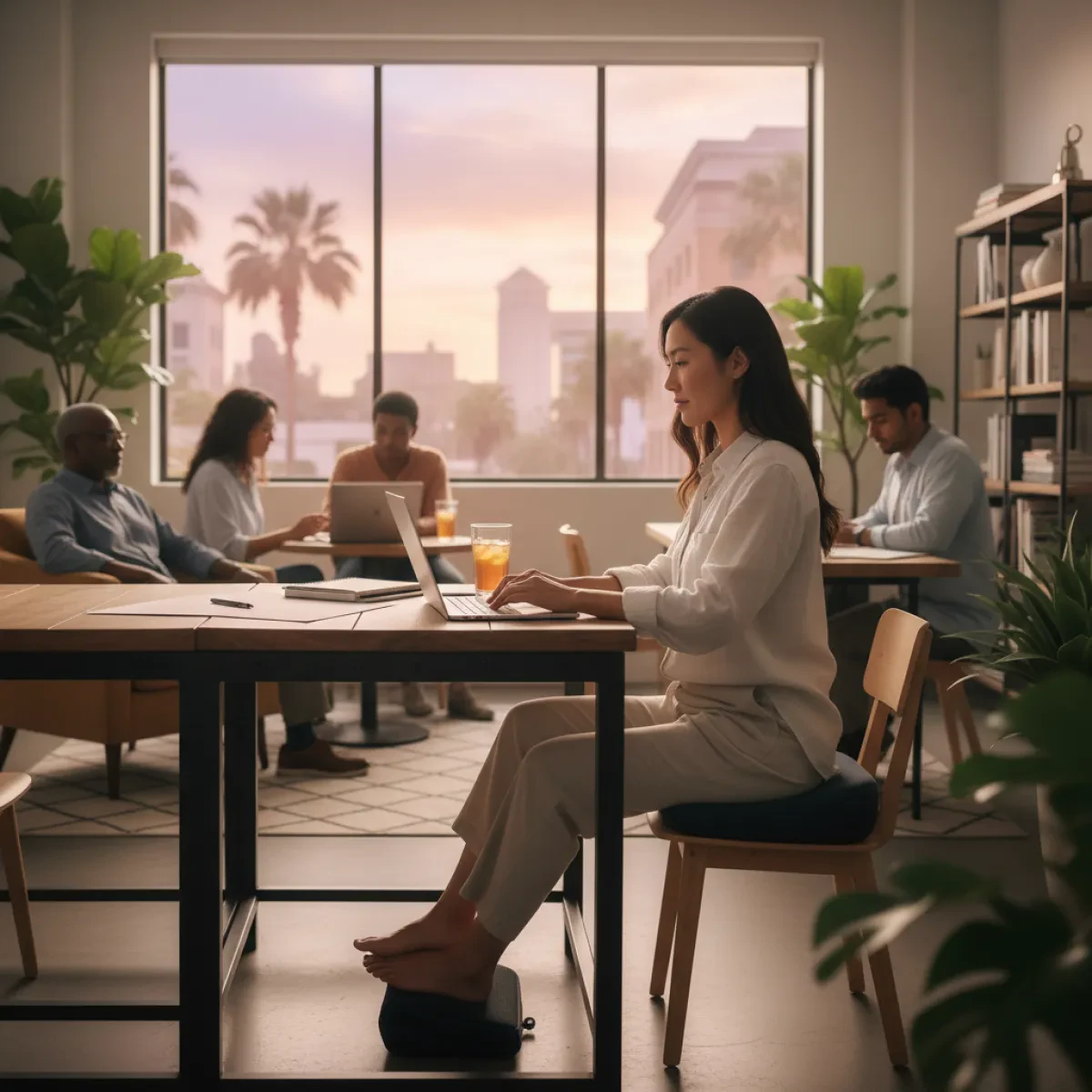
The Thermal Challenge of the Southern Home Office
For remote professionals working in the humid subtropical climates of the United States, such as Florida, the Gulf Coast, and parts of the Eastern Seaboard, standard ergonomic advice often requires adaptation. While traditional ergonomics focuses on spinal alignment and viewing angles, the reality of the American summer means workers must also manage thermal regulation. In regions where summer temperatures frequently exceed 90°F and humidity remains high, the interface between the worker and their chair becomes a critical zone for comfort and productivity.
Prolonged sitting in these conditions can create a micro-climate of trapped heat. This phenomenon is often overlooked in standard office design but can lead to poor posture as workers unconsciously shift to avoid sticky surfaces. Occupational health studies in the US suggest that thermal discomfort is a primary driver of distraction, potentially reducing cognitive performance for knowledge workers in the tech and finance sectors.
Material Physics: The Mesh vs. Leather Decision
The choice of chair material is a significant factor in maintaining ergonomic stability in humid regions. In the dryer climates of the American West, leather or high-density foam offers durability. In the humid South, however, these materials often act as insulators.
- Full Mesh Construction: Ergonomic specialists typically identify full mesh (seat and back) as the standard for hot climates. The open weave allows continuous airflow, preventing the buildup of heat. US-based manufacturers like Herman Miller and Steelcase are market leaders in this technology, offering models specifically engineered for airflow.
- Performance Fabrics: Some modern chairs use moisture-wicking synthetic fabrics similar to athletic wear. While superior to leather, they may still retain more heat than open mesh, which is a consideration for home offices without industrial-grade cooling.
Sourcing and Standards in the US Market
Unlike markets with limited access to ergonomic furniture, the United States benefits from a robust domestic supply chain. A regulatory-compliant ergonomic chair typically costs between $400 and $1,500 USD. When sourcing furniture, US workers are generally advised to look for products that meet the ANSI/HFES 100-2007 standard, which outlines specific requirements for computer workstations.
Major US retailers and direct-to-consumer brands offer rapid shipping, making it easier for freelancers and remote employees to acquire proper gear. Additionally, for those employed by major corporations, stipends for home office equipment have become increasingly common since 2020.
Relocation and Regional Mobility
The recent migration of the tech workforce from traditional hubs like San Francisco and New York to the Sunbelt cities of Austin, Miami, and Nashville has highlighted these climatic challenges. Professionals moving to these areas often find that their previous home office setups are ill-suited for the local humidity.
This shift also affects international talent. Foreign nationals arriving in the US on H-1B specialty occupation visas or L-1 intracompany transfers often settle in these growing tech hubs. For these workers, understanding the local lifestyle and climate is an essential part of the adjustment process, alongside navigating the complex immigration landscape.
U.S. Citizenship and Immigration Services (USCIS)
Call the USCIS Contact Center or visit uscis.gov to check visa options, case status, and filing requirements.
USCIS handles all employment-based and family-based immigration petitions. For visa stamp appointments, contact the U.S. Embassy or Consulate in your country.
Skin Health and Air Conditioning
High humidity introduces specific biological risks to the sedentary worker, such as contact dermatitis. While air conditioning is standard in US homes, reliance on it can create dry indoor air that contrasts with the humid outdoors. To mitigate discomfort, occupational therapists often suggest:
- Frequent Micro-Breaks: Standing up every 30 minutes allows for circulation and spinal reset. The Occupational Safety and Health Administration (OSHA) recommends regular breaks to reduce eye strain and fatigue.
- Standing Desk Integration: Alternating between sitting and standing is particularly effective, as standing maximizes surface area exposure to airflow.
- Climate Control Placement: Positioning the workspace to maximize air circulation without direct drafts is critical. Ceiling fans, common in Southern homes, can supplement air conditioning to provide gentle airflow.
Conclusion
Achieving ergonomic health in the humid regions of the United States requires a holistic approach that integrates furniture selection and environmental management. By prioritizing breathable mesh, adhering to ANSI/BIFMA standards, and managing the micro-climate around the workstation, remote workers can maintain productivity despite the heat.