How US Panel Interviews Differ by Industry and Region
Panel interviews remain a standard hiring format across many US industries, but the body language expectations and seating norms that accompany them can shift dramatically depending on the sector and city. A candidate interviewing at a financial services firm in Midtown Manhattan is likely to encounter a notably different physical environment than someone meeting a hiring panel at a tech campus in Austin, Texas or a biotech startup in Cambridge, Massachusetts.
According to the Society for Human Resource Management (SHRM), panel interviews typically involve two to five interviewers assessing a single candidate over 45 to 60 minutes. For international candidates, many of whom enter the US workforce through H-1B sponsorship, L-1 intracompany transfers, or Optional Practical Training (OPT) following a US degree, the format can feel unfamiliar. In many countries, sequential one-on-one interviews are the norm, and the shift to addressing multiple evaluators simultaneously requires deliberate adjustment.
Seating Configurations Across US Corporate Environments
The physical setup of a US panel interview room generally falls into one of two categories: the rectangular conference table, where panelists sit along one side and the candidate faces them, or the U-shaped arrangement more common in executive-level interviews. In practice, the layout tends to reflect the company's broader culture.
At large financial institutions concentrated in cities like New York and Chicago, conference rooms are typically formal, with assigned seating, printed agendas, and name placards. According to career advisory platforms such as Glassdoor, candidates interviewing at firms like JPMorgan Chase or Goldman Sachs report highly structured panel environments where the seating arrangement is predetermined.
By contrast, technology companies in the San Francisco Bay Area, Seattle, and Austin frequently conduct panel interviews in more casual settings. Candidates interviewing at companies in the broader tech ecosystem sometimes report panels held in open lounges or collaborative spaces where seating is less rigid. Despite the informality of the setting, the evaluative rigor of these interviews generally remains high, a distinction that international candidates sometimes find misleading.
When no seat is specifically indicated, waiting briefly for the panel to gesture toward a chair is generally considered a respectful approach. Career coaches frequently note that standing during initial introductions and sitting when the panelists sit is a safe default in most US corporate environments.
Posture Expectations in Formal and Casual US Workplaces
Research covered by behavioral communication outlets such as Science of People suggests that US interviewers typically associate upright posture with confidence and attentiveness. The commonly described ideal involves sitting with the back straight but not rigidly stiff, shoulders relaxed, and feet flat on the floor.
A slight forward lean of roughly 10 to 15 degrees is widely reported as a positive engagement signal. This small postural shift communicates active interest without encroaching on the shared table space. Leaning back significantly or slouching tends to be interpreted as disinterest.
However, the degree to which posture is scrutinized varies by industry. In healthcare hiring panels, common at major hospital networks and medical centers in cities like Boston, Houston, and Rochester, Minnesota, posture expectations often reflect the clinical professionalism of the sector. In creative industries concentrated in cities like Los Angeles, Portland, and Brooklyn, a slightly more relaxed sitting position may be entirely appropriate.
For international candidates accustomed to specific sitting protocols, such as those common in East Asian or South Asian business cultures, the US norm generally sits in a middle range: less formal than many hierarchical traditions, but more structured than the candidate might assume from the casual dress codes common at many American workplaces.
Eye Contact Distribution in a Panel Setting
Direct eye contact is widely considered a sign of honesty and engagement in US business culture. The anthropologist Edward T. Hall, whose foundational research on proxemics established much of the framework for understanding American spatial norms, noted that Americans typically maintain more consistent eye contact during professional interactions than individuals from many East Asian, South Asian, or West African cultures.
In a panel interview, the most frequently recommended technique involves directing initial eye contact to the panelist who asked the question, then gradually broadening gaze to include other panel members as the answer develops. Career advisory sources such as TopResume and FlexJobs consistently recommend turning the shoulders slightly, not just the eyes, to face each panelist when directing attention their way.
A common challenge reported by international candidates, particularly those from cultures with strong hierarchical communication norms, is the instinct to direct all answers toward the person perceived as most senior. In US panel interviews, each panelist typically scores the candidate independently, so distributing eye contact as evenly as practical is generally considered important.
Hand Gestures and Personal Space in the American Context
In US panel interviews, hands are generally expected to be visible on or near the table surface. Career communication experts typically suggest resting hands lightly on the table with palms relaxed and open. Hiding hands under the table or in pockets may be perceived as a sign of discomfort or evasion in the American business context.
Moderate hand gestures are typically welcomed and can help reinforce points, particularly in industries that value presentation skills. The generally cited guideline is that gestures are most effective when contained within the frame of the upper body, roughly between the waist and shoulders. For candidates from cultures where expressive hand movement is a natural part of communication, the US corporate norm represents a moderate middle ground.
Regarding personal space, Hall's research identified the social distance zone of approximately 4 to 6 feet as the standard for American professional interactions. The conference table in a panel interview typically enforces this distance naturally. International candidates from Latin American, Middle Eastern, or Southern European backgrounds, where comfortable business conversation distances tend to be shorter, may find the US setup comparatively distant.
The Greeting Sequence at US Panel Interviews
The opening moments of a panel interview carry significant weight. According to career advisory sources, the generally expected sequence involves entering the room at a confident but unhurried pace, making eye contact, smiling, and offering a handshake to each panelist when physically practical.
The US business handshake is typically described as firm, lasting approximately two to three seconds. Career coaches note that international candidates sometimes offer handshakes that feel too brief or too soft by American standards. Matching the pressure and duration of each panelist's handshake is a frequently cited adaptive strategy.
When panelists are already seated behind a wide table, a smile, verbal greeting, and slight nod are generally considered an acceptable substitute for a handshake. Repeating each panelist's name during introductions is widely recommended as both a memory aid and a rapport-building technique. Offering a brief pronunciation guide for one's own name is generally appreciated by US interviewers.
Virtual Panel Interviews: A Growing US Norm
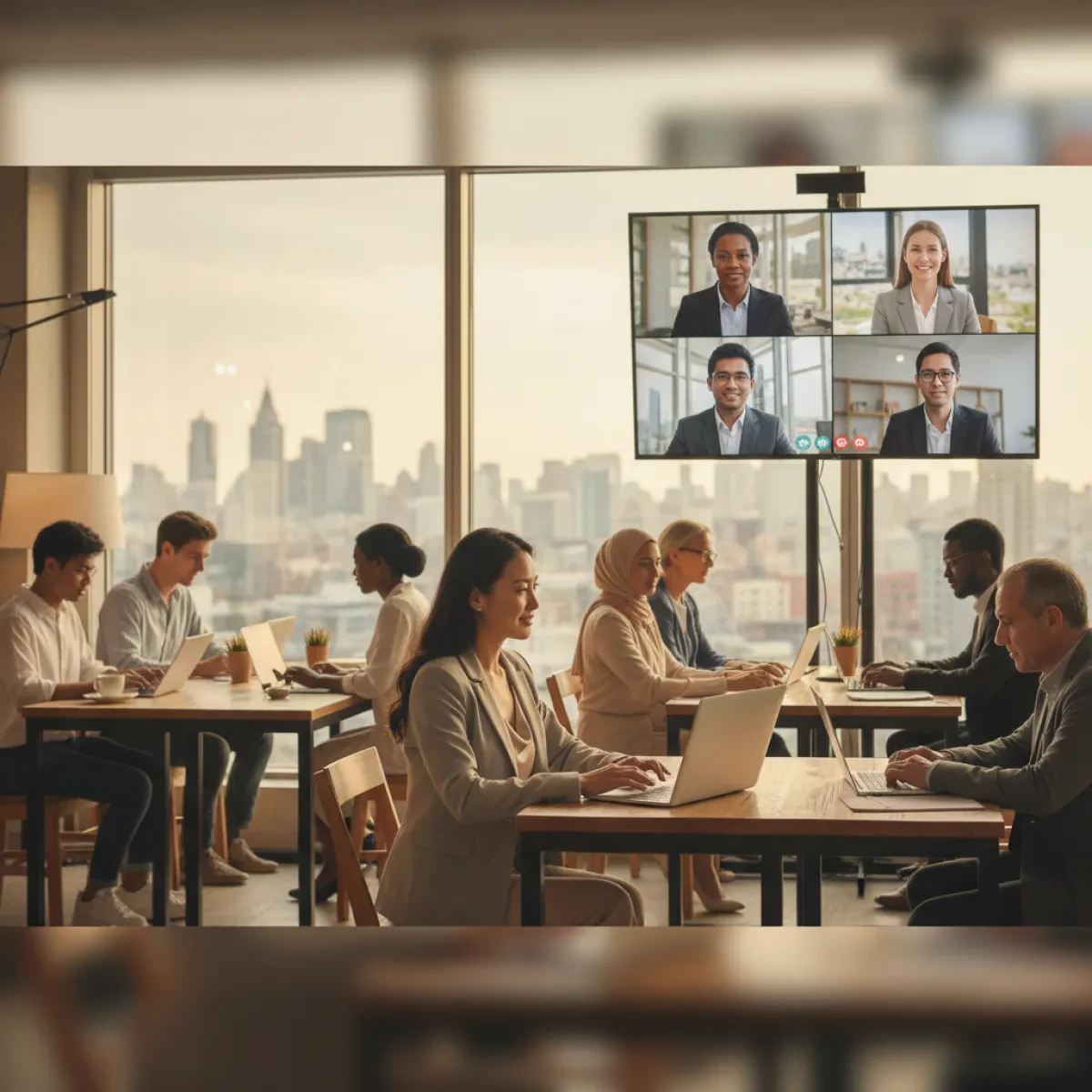
Many US employers, particularly in the technology, finance, and consulting sectors, now conduct panel interviews via video conferencing platforms. According to hiring trend reports, hybrid and remote interview formats have remained prevalent across major US job markets since 2020.
The body language fundamentals remain largely the same in virtual settings, with several adjustments commonly recommended. Placing the camera at eye level helps replicate natural eye contact. Framing the shot to include the head, shoulders, and upper chest allows panelists to observe posture and hand gestures. Sitting slightly forward and away from the backrest helps maintain an alert appearance, as video compression can flatten visual cues.
A clean, well-lit background is considered a baseline expectation. For international candidates conducting virtual interviews from abroad or from shared living situations common in expensive US metro areas, investing in a neutral backdrop and consistent lighting is frequently recommended by career coaches.
Considerations for International Candidates on US Work Authorization
International candidates interviewing with US companies are often simultaneously navigating complex work authorization processes. According to USCIS, employer-sponsored visa categories such as the H-1B, L-1, and O-1 each involve specific employer obligations, and the interview process itself sometimes includes questions about a candidate's authorization timeline.
Body language considerations intersect with this reality in subtle ways. Career coaches who specialize in cross-cultural hiring note that anxiety about visa status can manifest as physical tension, rigid posture, or reduced expressiveness during interviews. Awareness of this tendency may help candidates consciously maintain the relaxed, engaged demeanor that US interviewers generally expect.
For any questions about work authorization, visa sponsorship timelines, or employer obligations, consulting a licensed immigration attorney is strongly recommended.
U.S. Citizenship and Immigration Services (USCIS)
Call the USCIS Contact Center or visit uscis.gov to check visa options, case status, and filing requirements.
USCIS handles all employment-based and family-based immigration petitions. For visa stamp appointments, contact the U.S. Embassy or Consulate in your country.
Practical Preparation Strategies
- Mock panels: Practicing with two or three colleagues seated in a panel formation can help candidates rehearse eye contact distribution and posture management.
- Video self-review: Recording a practice session and reviewing it with attention to posture, hand placement, and eye patterns is a widely recommended technique.
- Company research: Platforms such as Glassdoor and Blind often include candidate-reported details about interview formats at specific US employers, which can help international candidates anticipate the formality level.
- Industry calibration: Body language expectations at a Houston energy company, a Boston biotech firm, and a Seattle tech giant may differ meaningfully; researching sector norms is generally considered valuable preparation.
- Breathing techniques: Controlled breathing before entering the interview room is frequently cited as an effective method for reducing physical tension.
When to Consult a Qualified Professional
While body language and sitting norms are matters of cultural preparation, international candidates often encounter related questions that fall outside general career guidance. Any matters involving employment contracts, workplace rights, accommodation requests, or accessibility needs are best directed to a qualified employment attorney licensed in the relevant US state. For questions related to work authorization or immigration status, consulting a licensed immigration attorney is strongly recommended.