- Galway's older housing stock often lacks dedicated office space requiring adaptive ergonomic solutions.
- High humidity and lower indoor temperatures in the West of Ireland can exacerbate postural stiffness.
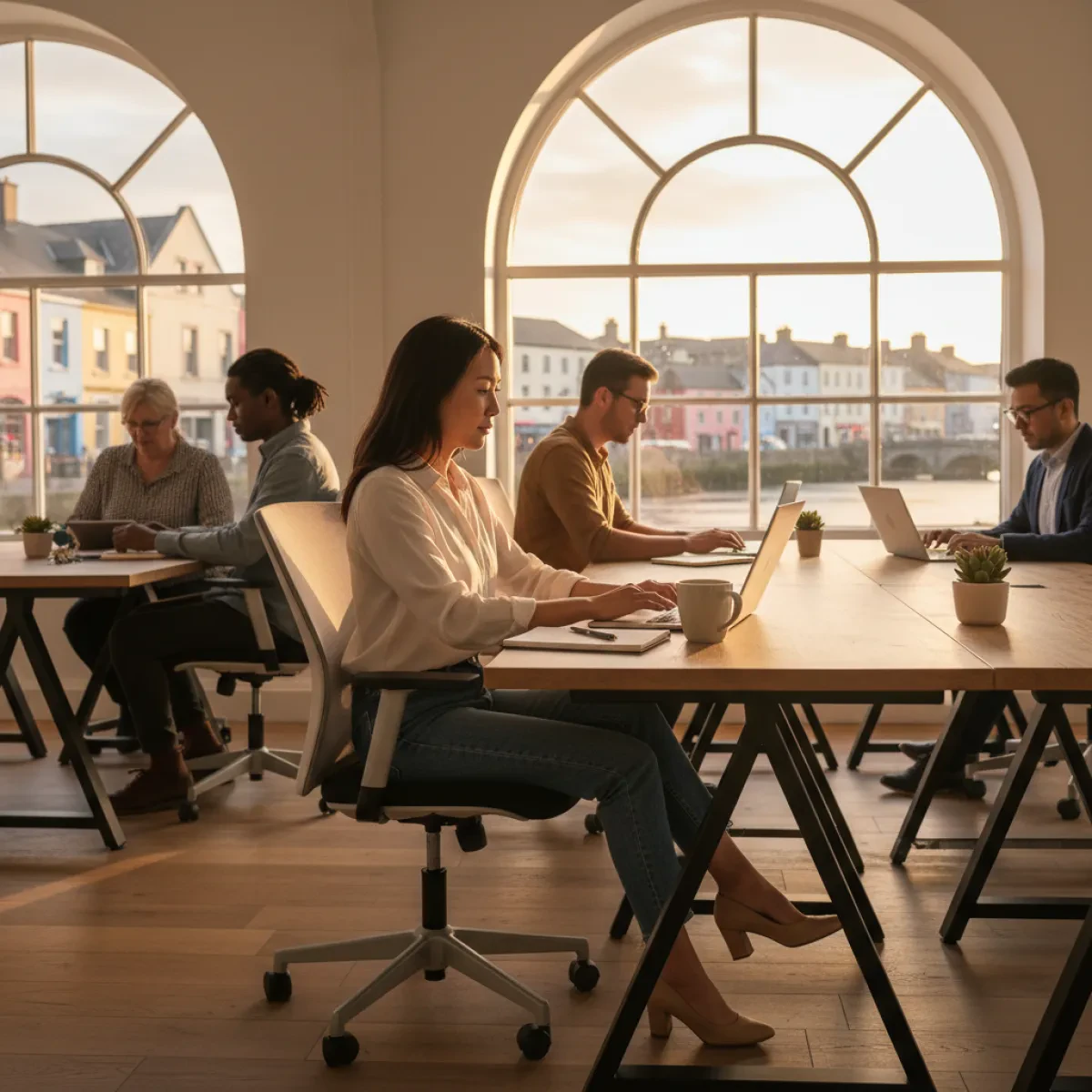
- Local co-working hubs like the PorterShed provide benchmarks for professional seating standards.
- The HSE (Health Service Executive) provides specific guidelines for Display Screen Equipment (DSE) usage.
- Active recovery can be integrated with local geography including the Salthill Promenade.
The Intersection of Heritage Housing and Modern Ergonomics
Galway has established itself as a premier destination for remote professionals particularly in the med-tech and software sectors. However digital nomads and remote employees relocating to the City of the Tribes often face a unique logistical challenge: integrating modern ergonomic standards into historic or older rental properties. Unlike purpose-built office blocks in Dublin residential architecture in Galway—from the Claddagh to Salthill—often features smaller rooms and limited natural light which can directly impact sitting posture and long-term musculoskeletal health.
Reports from the Chartered Society of Physiotherapy indicate that makeshift workstations are a primary contributor to back and neck strain. In Galway the prevalence of 'box rooms' converted into offices means that spatial awareness is critical. Professionals must often select compact furniture that does not compromise on lumbar support. For those navigating these constraints understanding the local property landscape is as vital as the equipment itself. For broader context on working outside major hubs review our analysis on preventing professional isolation for remote workers in rural Ireland.
Climate-Specific Posture Challenges
Ergonomics is not solely about furniture; it is also about environment. Galway's oceanic climate characterized by high humidity and frequent temperature fluctuations presents specific challenges for sedentary workers. Cold drafts in older buildings can cause workers to instinctively hunch their shoulders or adopt a 'turtling' posture to conserve body heat. This unconscious tension often leads to upper trapezius stiffness regardless of chair quality.
Occupational health experts suggest that maintaining an ambient room temperature of at least 18-21°C is essential for maintaining relaxed neutral posture. In the West of Ireland this may require supplemental heating solutions or thermal clothing layers rather than relying solely on central heating which may be intermittent in older rentals. Comparing this to other regions can be instructive; see our report on ergonomic sitting strategies for remote workers in high-humidity climates like Brazil for a contrasting perspective.
Benchmarks from Local Co-working Infrastructure
For remote workers unable to optimize their home setup Galway's co-working ecosystem offers a viable alternative with professional-grade ergonomics. Hubs such as the PorterShed and various spaces in the Galway Technology Centre utilize commercial-grade seating designed for 8-hour usage cycles. These spaces typically adhere to EU standards for office furniture ensuring adjustability in seat height back tilt and armrest positioning.
Using these spaces even part-time can serve as a 'posture reset' allowing the body to realign after days spent in less optimal home environments. Furthermore these hubs often provide standing desks allowing for the transition between sitting and standing that researchers recommend for metabolic health. This aligns with broader trends in workspace design as discussed in our article on Scandinavian ergonomics and proper sitting posture.
Procuring Ergonomic Equipment in the West
Sourcing high-quality office furniture in Galway requires logistical planning. While major retailers have a presence availability of specialized ergonomic chairs (such as those with high mesh backs or dynamic lumbar support) can be lower than in the capital. Delivery times to the West Coast for specialized equipment from continental Europe or the UK can also be longer due to logistics networks.
Remote workers are advised to test furniture in person whenever possible. Local office supply providers in the Ballybrit and Parkmore industrial estates often have showrooms. For those managing a relocation budget it is worth noting that investing in a chair is often more cost-effective than long-term physiotherapy. For a comparative look at relocation costs check our guide on budgeting for relocation and hidden costs of moving to Cork.
Active Recovery: Leveraging Galway's Geography
The concept of 'active sitting' extends to how breaks are utilized. Ergonomists recommend the 20-20-20 rule (looking away every 20 minutes) but also emphasize gross motor movement every hour. Galway's compact geography allows for effective 'posture breaks'. The Salthill Promenade offers a flat hard surface ideal for brisk walking to reset the lumbar curve while the canals near the University of Galway provide sheltered routes for windy days.
Integrating these walks into the daily routine does not just aid physical health; it also combats the mental fatigue associated with prolonged sitting. The proximity of nature in Galway is a distinct ergonomic advantage over larger more congested metropolises. However newcomers should invest in proper rain gear to ensure weather does not become a barrier to these essential movement breaks.
Regulatory Context and Employer Obligations
For those employed by Irish companies remote work assessments are often a legal requirement. Under the Safety Health and Welfare at Work Act employers have a duty of care regarding the workspace of remote employees. This typically involves a risk assessment of the home office setup including the desk chair lighting and ventilation.
Employees should familiarize themselves with the Health and Safety Authority (HSA) guidelines on Display Screen Equipment (DSE). These guidelines outline the requirements for workstation layout including the position of the screen relative to windows (to avoid glare) and the necessary adjustability of the chair. International contractors may not be covered by these specific protections and should self-audit their setup against these standards. Understanding local communication nuances is also key when discussing these needs with Irish clients; see our guide on dialect coaching and essential training for customer-facing roles in Ireland.
Lighting and Visual Ergonomics
Galway's latitude means significantly shorter daylight hours in winter which can impact visual ergonomics. Poor lighting forces workers to lean forward to read screens compromising spinal alignment. The 'Galway gloom' necessitates a strategic lighting plan. A combination of overhead ambient lighting and a focused task lamp is generally recommended to reduce eye strain.
Positioning the desk perpendicular to the window is the standard recommendation to control the variable light typical of the Atlantic coast. This minimizes both direct glare from rare sun spells and the strong contrast issues during overcast periods. This attention to visual detail is a crucial component of total body ergonomics.